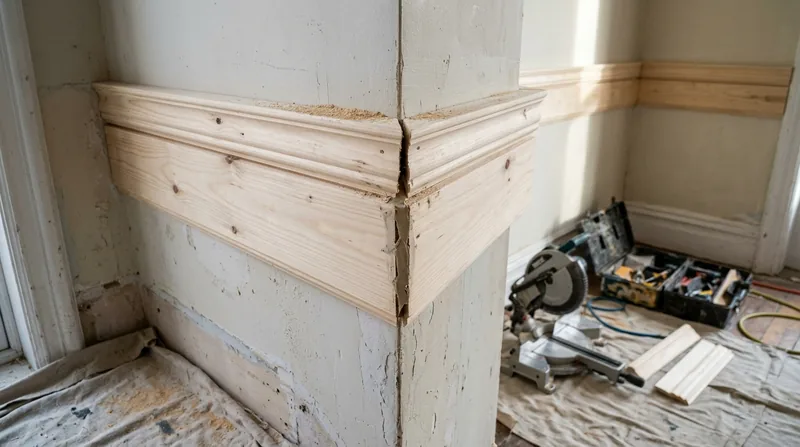




Crown Molding & Baseboard Installation in New York is a signature finish carpentry service that separates a carefully restored brownstone in Park Slope from a hurried renovation. The 1870s to 1910s rowhouses that line Brooklyn's tree-lined blocks, the Tudors of Forest Hills, and the Victorian frame homes of Ditmas Park all demand trim work that respects their original period profiles or establishes a clean, modern aesthetic with precision coping and tight caulk lines. Baseboards and crown molding set the visual rhythm of a room, protect plaster and drywall from water and impact, and anchor the architectural character that New York homeowners invest in restoring. Whether you are matching existing plaster crown in a Harlem parlor floor, installing fresh trim in a renovated Astoria kitchen, or adding wainscoting to a Prospect Heights dining room, the quality of the joint work and the finish determines whether the room reads as complete or half-done. We install crown molding, baseboards, chair rail and window trim with the coped joints and clean caulk lines that period homes demand, and we work from your existing profiles or design crisp, modern details that complement your space.
Why Crown Molding and Baseboard Installation Matters in New York Brownstones and Older Homes
New York's residential stock is defined by its trim work. A brownstone stair hall with original crown molding and tall baseboards reads as intentional and preserved; the same room without it feels stripped. Baseboards protect the lower wall from water, furniture damage, and the wear that comes from 150 years of foot traffic and cleaning. Crown molding covers the transition between wall and ceiling, hides minor out-of-plumb conditions, and establishes the visual weight that period interiors require. In older homes, original trim is often damaged by water, carpenter ants, or previous careless renovation, and matching or replacing it correctly is the difference between a room that feels authentic and one that feels incomplete.
- Baseboards protect plaster and drywall from water splash, furniture movement, and impact damage common in high-traffic New York homes.
- Crown molding hides ceiling irregularities and out-of-plumb walls that are nearly universal in rowhouses built before 1920.
- Original trim profiles in Park Slope, Harlem and Prospect Heights carry architectural character that modern flat stock cannot replicate.
- Coped joints at inside corners require skilled hand work and remain invisible to the eye, marking the difference between amateur and professional trim carpentry.
- Tight caulk lines and paint-ready surfaces eliminate the gap-and-gap look that plagues rushed renovation work across Brooklyn and Queens.
Proper installation also preserves the resale value and historical integrity of a home, a concern that matters deeply to New York homeowners investing in neighborhoods where original details command respect and money.
Key info: A brownstone in Park Slope with original 6-inch crown molding and 10-inch baseboards is worth more than an identical home with flat modern trim. Matching the original profile or restoring damaged sections is a sound investment, not a cosmetic upgrade.
For more context on how wood trim behaves in New York's climate, see our guide to Finish & Trim Carpentry in New York.
How We Install Crown Molding and Baseboards: The Process in New York Homes
Crown molding and baseboard installation in New York requires understanding the specific challenges of older homes: out-of-plumb walls, uneven ceilings, and the need to match existing profiles or establish modern details that read as intentional. We begin by measuring and profiling the existing trim (if present), locating studs and ceiling joists, and establishing a level baseline for baseboards. Crown molding is scribed to the ceiling, coped at inside corners, and mitered at outside corners with glue and fasteners that hold tight through seasonal humidity swings. Baseboards are installed with fasteners into studs, caulked and sanded smooth, then primed and painted or stained to match your specification.
- We measure the room, profile existing trim if present, and identify studs and ceiling joists with a stud finder and layout marks.
- We establish a level baseline for baseboards using a laser level, accounting for sloped or uneven floors common in rowhouses and older frame homes.
- We cut and fit crown molding with coped joints at inside corners, eliminating the visible gaps that miter joints create when walls are out of plumb.
- We install baseboards with fasteners into wall studs, spacing them 16 inches apart and setting fasteners below the surface for a seamless finish.
- We caulk all gaps between molding and wall or ceiling with paintable caulk, sand the surface smooth, and leave the work ready for paint or stain.
- We remove dust and debris, protect flooring and adjacent surfaces, and coordinate timing with your painter or stain contractor.
This step-by-step approach ensures that trim work reads as built-in and permanent, not applied and temporary.
Example: A Ditmas Park Victorian with 8-inch crown molding and 12-inch baseboards had walls that were 1 to 1.5 inches out of plumb from top to bottom. We coped every inside corner, shimmed the crown to follow the ceiling line, and installed the baseboards with a level baseline 12 inches from the floor. The finished room looks period-correct and intentional, with no visible gaps or misalignment.
For related structural or restoration work, see our service page on Finish & Trim Carpentry in New York.
Crown Molding and Baseboard Installation Methods: Approaches for Different Home Types
| Approach | Description | Best for |
|---|---|---|
| Profile matching | We measure and mill or source trim that matches existing original crown and baseboards, respecting the home's architectural period and character. | Brownstones, Victorians, and older rowhouses where original trim is present and defines the room's visual identity. |
| Modern crisp install | We install contemporary flat or simple-profile crown and baseboards with tight caulk lines, clean miters, and a minimalist aesthetic. | Renovated lofts, modern apartments, and homes where owners prefer a clean, unadorned finish. |
| Partial restoration | We repair or replace damaged sections of original trim, blending new wood seamlessly with existing profiles and finishes. | Homes where water damage, carpenter ants, or previous renovation has compromised trim in select rooms or wall sections. |
| Custom or mixed profile | We design and install wainscoting, chair rail, or custom trim combinations that blend period and modern details for a signature look. | Dining rooms, parlor floors, and spaces where layered trim details enhance architectural interest and character. |
Each approach is tailored to your home's age, existing condition, and your design intent, ensuring that trim work enhances rather than conflicts with the space.
Crown Molding & Baseboard Installation Cost in New York: What to Expect
Crown molding and baseboard installation costs in New York vary based on room size, trim profile complexity, the need to match existing profiles, and the condition of walls and ceilings. Most straightforward installations start at $450 to $600 per room for a standard bedroom or small living space with simple profiles and level walls. Larger rooms, complex coping work, profile matching, or the need to repair or level walls before trim installation push costs higher. A Park Slope parlor floor with 10-foot ceilings and original 6-inch crown molding that needs matching and repair typically runs $1,200 to $2,500 depending on the linear footage and the complexity of the coping work. Rooms with significantly out-of-plumb walls or water-damaged plaster require extra prep and shimming, adding cost and time.
The best way to understand cost for your specific project is to get 2 to 3 estimates from local carpenters who will visit your home, measure the space, assess wall and ceiling condition, and provide a detailed quote. We include travel within New York and surrounding areas at no additional charge, and our estimate is free and no-obligation. Call us at (929) 493-3098 or visit our pricing overview for more detail on what drives costs in your neighborhood.
Factors that increase cost include out-of-plumb walls requiring shimming, ceiling irregularities requiring scribed crown, profile matching or milling custom trim, water-damaged plaster requiring repair before trim installation, and the need to remove or work around existing damaged trim. Labor and material are separate line items on our estimate, so you understand exactly what you are paying for and why.
Crown Molding & Baseboard Installation Near Me: What to Look for When Hiring a Carpentry Contractor in New York
Hiring the right carpenter for trim work is essential because the quality of coping, caulking, and finishing determines whether the room reads as professionally completed or amateur. When evaluating a contractor in New York, ask for examples of previous trim installations in older homes or brownstones, request references from recent clients, and verify that the carpenter has experience matching original profiles and executing coped joints. Confirm that the contractor is fully insured and ask to see a certificate of insurance naming your address as an additional insured. Get multiple estimates so you understand the range of pricing and approach; a low bid that cuts corners on coping or caulk work will show immediately once paint is applied.
- Ask the contractor for photos or references from similar homes in your neighborhood, such as Park Slope, Prospect Heights, Harlem, or Ditmas Park.
- Confirm that the contractor has experience with coped joints, scribing crown to out-of-plumb ceilings, and matching existing period profiles.
- Request a certificate of insurance showing general liability coverage and naming your address as additional insured during the work.
- Get written estimates from at least two contractors, including labor, materials, prep work, and timeline so you can compare fairly.
- Ask whether the contractor will coordinate with your painter or stain contractor and whether caulk, primer and paint are included or separate.
- Verify that the contractor is responsive and communicates clearly about scheduling, potential wall or ceiling repairs, and any changes to scope or cost.
A carpenter who takes time to understand your home's age, architectural style, and your vision for the finished space is more likely to deliver work that enhances your home's value and character.
Contact us for a free, no-obligation estimate at our contact page or call (929) 493-3098. We respond within 24 hours and provide detailed estimates that explain what is included and why.
Ready to start your crown molding and baseboard installation project? Call us at (929) 493-3098 or request a free estimate today. We serve New York, Yonkers, Mount Vernon, New Rochelle, White Plains, and surrounding areas with the same crew, the same precision, and the same commitment to quality trim work that New York homeowners expect.
Crown Molding & Baseboard Installation in New York: Pricing Guide
| Service | Price | Details |
|---|---|---|
| Single room, standard profile | Starting at $450 | Baseboards and simple crown molding, level walls, no profile matching required, includes caulk and prep for paint |
| Larger room or complex profile | Starting at $800 | 10-foot ceilings, multiple coped corners, profile matching, or out-of-plumb walls requiring shimming and scribing |
| Full floor or whole-home trim | On estimate | Multiple rooms, custom profiles, wainscoting or chair rail, water damage repair, or significant wall and ceiling prep before installation begins |
| Travel | Included | No separate mileage or call-out fee for projects in New York and surrounding service areas |
| Free estimate | No charge | Response within 24 hours at (929) 493-3098, includes on-site measurement, wall and ceiling assessment, and detailed written quote |
Indicative pricing, the exact cost depends on square footage, finish, and site access. Free personalized estimate within 24h at (929) 493-3098.


