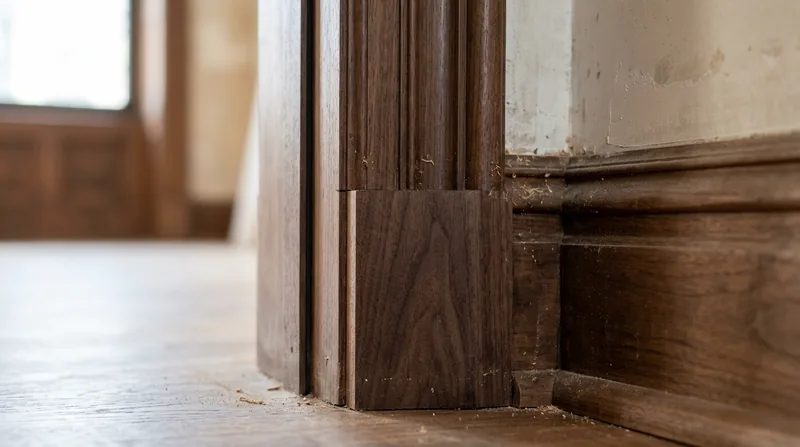




Finish & Trim Carpentry in New York means the difference between a house that looks finished and one that feels complete. From tight miters on crown molding in a Park Slope brownstone to scribed wainscoting that wraps a Ditmas Park parlor floor, the craft lives in the details. New York's oldest homes, built between 1870 and 1920, were designed around ornamental trim and custom casings that define their character. Modern additions and renovations demand the same precision. We handle interior trim, door and window casings, baseboards, crown molding, paneling, and built-in shelving across Brooklyn, Manhattan, the Bronx, Queens and Staten Island, working in homes where original woodwork sets the standard and new work must match it.
Why Finish Carpentry Matters in Historic and Contemporary New York Homes
Finish work is what homeowners see and touch every day. A poorly fitted casing around a door jamb, a crown molding joint that opens up over time, or baseboards that sit crooked undermine the entire room, no matter how solid the structure underneath. In New York, where homes range from 150-year-old rowhouses with 12-foot ceilings to modern gut renovations, finish carpentry sets the tone for quality and craft. Tight reveals, consistent reveals, and joints that stay closed through seasonal wood movement are not negotiable.
- We measure and fit every piece to the room, not cut it off a template, because walls in older New York homes are rarely square or plumb.
- We use coped joints on crown molding and baseboards, which hold their fit through winter shrinkage and summer swell better than mitered butt joints.
- We scribe trim and paneling to follow the contour of existing walls, floors and ceilings so seams disappear and the eye sees one continuous line.
- We match existing wood species, grain direction and stain color in prewar homes, or execute new work in the species and finish you specify.
- We install door casings, window trim and baseboards with consistent reveals so the proportions read intentional, not accidental.
Finish carpentry is the craft that separates a handyman repair from work that lasts and looks right.
Local example: A brownstone in Brooklyn Heights with original 4-inch crown molding in the front parlor needed the return wall trimmed to match. We sourced period-appropriate stock, coped every joint, and matched the existing stain so the new work reads as original. The homeowner could not tell where the old trim ended and the new began.
For more on the structural carpentry that supports your home, see our work in Framing & Structural Carpentry.
How We Approach Finish & Trim Carpentry in New York Homes
Every finish carpentry job starts with a site visit and measurement. We document existing conditions, understand the room's geometry, and identify the species and finish of existing trim so new work integrates seamlessly. We then build a plan that accounts for seasonal wood movement, access to walls and ceilings, and the order of installation so later trades do not damage what we hang. We work clean, protect finished surfaces, and install trim in a sequence that lets adhesive, finish and caulk cure between steps.
- We visit the site, measure all walls and ceilings, photograph existing trim and finishes, and document any irregularities or existing damage.
- We provide a detailed estimate that breaks down labor by room or section, material costs, and timeline so you know exactly what the work will cost.
- We source or mill trim stock that matches the existing species, profile and finish, or we use the species and profile you select for new work.
- We install blocking and backing where needed to support trim and allow fastening into solid wood, not drywall or plaster alone.
- We hang and fit all trim, sand joints smooth, fill fastener holes, and prepare surfaces for final finish or paint.
- We caulk, stain or paint according to your specification, and perform final cleanup and touch-up.
This methodical approach means the trim stays tight, joints stay closed, and the work looks intentional rather than rushed.
Example from the field: A gut renovation in Jackson Heights required new door casings, window trim, and baseboard throughout a 1920s garden apartment. We milled all trim from clear Douglas fir, installed blocking at every stud, coped all baseboard joints, and hung the casings with consistent 3/8-inch reveals. The owner chose a natural stain that brought out the wood grain and unified the space.
If your project involves custom shelving or built-ins, we also offer Custom Built-Ins & Shelving in the same spirit of precision and craft.
Finish Carpentry Methods and Techniques
| Method | Description | Best For |
|---|---|---|
| Coped Joints | One piece cut to fit the profile of the other, creating a mechanical interlock that resists opening over time. | Crown molding, baseboards, and any trim where seasonal wood movement is expected. |
| Scribed Trim | Trim fitted to follow the contour of walls, floors or ceilings by tracing the surface and cutting to match. | Baseboards against uneven plaster or plaster walls, trim around architectural features, paneling in older homes. |
| Tight Miters | 45-degree angle joints cut with precision and held with adhesive and fasteners, then filled and sanded flush. | Door and window casings, returns on crown molding, exterior trim where coped joints are not practical. |
| Consistent Reveals | Casings hung so the gap between the casing and the door or window jamb is uniform all around, typically 3/8 inch. | All interior doors and windows, so the eye reads the trim as intentional and the room as professionally finished. |
| Blocking and Backing | Solid wood installed inside walls before drywall or plaster, so trim fastens into wood rather than hollow cavities. | Any trim installation in modern homes with stud framing, and in older homes where plaster is thin or deteriorating. |
Finish & Trim Carpentry Cost in New York: What to Expect
Finish carpentry pricing depends on the scope of trim, the complexity of the fit, the species and finish of the material, and the condition of the surfaces you are installing onto. A straightforward door casing job in a modern home with plumb walls and level floors costs less than scribing baseboards around an 1890s parlor floor with 2 inches of deflection. Material costs vary by species: pine and poplar are less expensive than oak or walnut, and custom milling adds time and cost. Labor is typically the larger component, because precision takes time.
We charge from $550 for straightforward trim work such as a single door casing or a short run of baseboard in a new construction or modern renovation. Crown molding in a full room, wainscoting, or multiple door and window casings in an older home typically runs higher because of the measurement, fitting and joint work involved. Custom scribing, milling, and stain-matching in a prewar home can extend the timeline and cost further. The best way to know your actual cost is to request a free estimate and have us visit the site, measure, and assess the existing conditions.
We provide detailed written estimates that break down labor, materials, and timeline so you can compare fairly with other bids and understand where your money goes. See our full pricing overview for more detail on how we structure estimates and what factors move the cost up or down.
What to Look for When Hiring a Finish Carpentry Contractor Near Me in New York
Finding the right finish carpenter in New York means looking beyond price and asking about method, experience, and references. A carpenter who talks about coped joints, consistent reveals, and scribing to fit irregular surfaces is thinking about the craft. A carpenter who rushes through the estimate, offers a price without measuring, or promises to "just match what's there" is likely to deliver rushed work. Ask to see photos of finished work, especially jobs in homes similar to yours. Call references and ask specifically about how trim joints have held up over time and whether the work looks intentional.
We are fully insured and carry liability coverage for the work we perform. We measure every job on site, provide a detailed written estimate, and stand behind our work with a commitment to precision and craft. We work with homeowners, contractors, and designers across New York and surrounding areas, and we are happy to provide references and photos of recent jobs. Call us at (929) 493-3098 to request a free estimate, or visit our contact page to schedule a site visit.
Finish & Trim Carpentry in New York: Pricing Guide
| Service | Price | Details |
|---|---|---|
| Single door or window casing | Starting at $550 | Includes measurement, blocking, installation, filling and sanding. Assumes plumb walls and level floor. |
| Baseboard, per linear foot | Starting at $45 | Includes coped joints, scribing to uneven floors, fastening, filling, sanding and prep for finish. Material separate. |
| Crown molding, per linear foot | Starting at $65 | Includes blocking, coped joints, consistent reveals, fastening, filling, sanding and prep for finish. Material not included. |
| Full room trim package (door, window, baseboard, crown) | On estimate | Requires site visit to assess wall condition, existing trim, species match and finish. Complexity and room size drive the scope. |
| Travel and site visits | Included | No mileage fee or travel surcharge within New York and surrounding service areas. |
| Estimate | Free | On-site measurement and detailed written estimate provided within 24 hours at no cost or obligation. |
Indicative pricing, the exact cost depends on square footage, finish, and site access. Free personalized estimate within 24h at (929) 493-3098.


