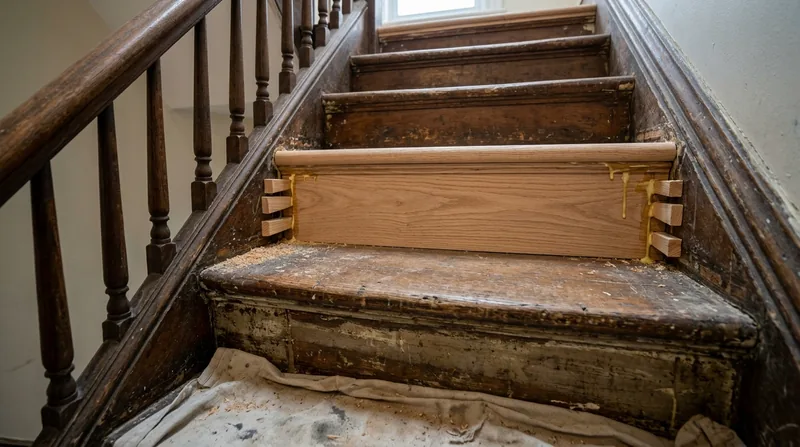




Stair & Railing Repair in New York demands a carpenter who understands the particular stresses that four-story brownstones, frame Victorians, and rowhouses place on treads, stringers, and balusters. New York's freeze-thaw cycles, moisture-driven wood rot, and the constant foot traffic of multi-family living wear staircases faster than most climates. A squeaky tread or loose baluster is not cosmetic, it is a sign of wood movement, fastener failure, or structural settlement that compounds over seasons. We repair and rebuild the staircases that climb Park Slope, Bed-Stuy, Flatbush, and the Bronx, restore period railings to code compliance, and install handrails and attic ladders that hold up through decades of use. Whether your staircase needs tread replacement, stringer repair, or a full railing restoration, we start by understanding what caused the wear and whether repair or replacement is the honest answer.
Why Stair & Railing Repair Matters in New York's Older Homes
Brownstone stoops and interior stairwells in New York sit at the mercy of water intrusion, salt air, and seasonal wood movement. Stringers (the angled boards that support treads) absorb moisture from cellars and party walls, softening over time. Treads compress and split under foot traffic, and loose balusters signal that the newel post is settling or the stringer has shifted. A failing stair is not just uncomfortable, it is a liability that can worsen quickly if left unaddressed, and it affects home value and insurance.
- We inspect stringers for rot, compression, and structural movement before recommending repair or replacement.
- We reglue and reinforce loose balusters and newel posts using traditional joinery and modern fastening where code permits.
- We repair or replace treads while preserving period character in historic homes and meeting current building code for handrail height and baluster spacing.
- We install code-compliant handrails and attic ladders in spaces where railings are missing or inadequate.
Staircase repair is structural work, and getting it right the first time prevents injury and protects your home's integrity.
Key info: New York City building code requires handrails on stairs with four or more risers, balusters spaced no more than 4 inches apart, and handrail height between 34 and 38 inches. Exterior stoops and interior stairwells in brownstones often have original railings that are not code-compliant. We repair and restore these railings while meeting current code, preserving the character that makes these homes valuable. Verify specific requirements with your local building department, as requirements for alterations and additions vary by district.
How We Approach Stair & Railing Repair in New York Homes
We start every staircase job with a careful inspection: we walk the treads, test baluster movement, probe stringers for soft wood, and check the newel post for settlement. We document what we find and explain what caused it, whether it is moisture, age, or structural movement. From there, we propose repair where the wood justifies it, and replacement only when the damage is too extensive or the cost of repair approaches the cost of new.
- We inspect the entire staircase assembly, including stringers, treads, risers, balusters, and newel post, to identify the root cause of squeaking, looseness, or visible damage.
- We probe for wood rot and soft spots using hand tools and our judgment, not guesswork, to distinguish surface wear from structural failure.
- We repair treads by gluing, screwing, or sistering (attaching a new board alongside a damaged one) to restore stability without removing the entire staircase.
- We reglue and reinforce balusters and newel posts using traditional mortise-and-tenon joinery where the original construction permits, or modern fastening where code requires.
- We replace stringers only when rot or damage is extensive enough that repair is not cost-effective, using Douglas fir or other species to match the original as closely as possible.
A brownstone staircase in Prospect Heights or Park Slope often has original treads and stringers that can be saved with careful repair, and we work to preserve that character while ensuring safety and code compliance. See our work on wood rot repair for more on how we address moisture-driven damage in older homes.
Example: A four-story brownstone staircase in Bed-Stuy with original Douglas fir stringers and walnut treads had loose balusters and a squeaky tread on the second flight. Inspection revealed that the newel post had settled about a quarter-inch, pulling the balusters slightly out of plumb. We shimmed the newel post, reglued and screwed the balusters, and sistered the damaged tread with a new board screwed from underneath. The staircase was restored to solid condition in two days, and the homeowner kept the original character of the home.
| Approach | Description | Best for |
|---|---|---|
| Tread repair and reinforcement | Glue, screw, or sister a new board to a damaged tread without removing the stringer. | Squeaky treads, surface splits, or compression that has not penetrated the full depth. |
| Baluster and newel repair | Reglue mortise-and-tenon joints, reinforce with hidden fasteners, or replace individual balusters while keeping the railing assembly intact. | Loose balusters, newel post settlement, or worn joinery in period railings. |
| Stringer repair and sistering | Attach a new support board alongside a damaged stringer to carry the load while keeping the original in place. | Stringers with rot in localized areas, compression, or separation from the wall. |
| Stringer replacement | Remove and replace one or both stringers with new Douglas fir or matching species when rot or damage is too extensive to repair. | Severe rot, water damage, or structural failure that makes repair cost-prohibitive. |
| Handrail and railing installation | Install code-compliant handrails, balusters, or full railing systems to meet current building code and safety standards. | Exterior stoops, interior stairs missing railings, or period railings requiring code upgrades. |
Stair & Railing Repair Cost in New York: What to Expect
Staircase repair in New York typically starts at $600 for minor repairs like regluing balusters or fixing a squeaky tread, and can reach $2,500 to $4,500 for more extensive work such as stringer sistering or tread replacement. The cost depends on the size of the staircase, how many flights you have, whether the wood is rotted or just loose, and whether you need handrails or code upgrades. A four-story brownstone staircase with original treads and damage to the first flight will cost less to repair than a complete stringer replacement on a steep attic stair.
Several factors move the price up or down. Stringers that are rotted or severely damaged cost more to replace than to repair. Access matters too: a staircase tucked into a narrow rowhouse is easier to work on than one in a cramped basement. If your local building department requires a permit for structural alterations (which many do for stringer replacement or railing changes), that adds time and coordination. We recommend getting 2 or 3 estimates from carpenters who will inspect the staircase in person, ask about the history of the home, and explain what they find. Visit our full pricing page for more detail on how we structure estimates and what moves the cost.
Stair & Railing Repair Near Me: What New York Homeowners Should Know When Hiring
Hiring the right carpenter for staircase repair means checking that they carry insurance, getting multiple estimates, and asking for references from recent jobs. A good carpenter will inspect your staircase carefully, explain what caused the damage, and tell you honestly whether repair or replacement makes sense. Ask whether they have worked on older homes in your neighborhood, whether they understand building code for handrails and balusters, and whether they can handle permits if your local building department requires them.
Request references from homeowners in New York or nearby towns where the carpenter has repaired staircases in brownstones or frame houses similar to yours. Ask to see photos of completed work, and ask whether the carpenter offers any warranty or guarantee on the repair. Do not assume that the cheapest estimate is the best one, especially if the inspector spends less than 20 minutes on site or does not ask detailed questions about the history of the home. Permits are often required for stringer replacement or railing alterations, and your local building department will specify what is needed. Verify permit requirements with your building department before hiring, and make sure your carpenter is willing to work with the permit process. Contact us at our contact page for a free estimate and to discuss your staircase in detail.
Stair & Railing Repair in New York: Pricing Guide
| Service | Price | Details |
|---|---|---|
| Minor tread and baluster repairs | Starting at $600 | Regluing, screwing, or reinforcing loose balusters, squeaky treads, or newel posts without removal |
| Tread replacement or sistering | Starting at $1,200 | Replacing or reinforcing one or more treads on a flight, including labor and materials for Douglas fir or matching species |
| Stringer repair or sistering | Starting at $1,800 | Repairing rotted or damaged stringer with reinforcement, including probing, assessment, and structural fastening |
| Stringer replacement or full railing work | On estimate | Replacing stringers, installing code-compliant handrails, or full railing systems require on-site inspection and permit coordination |
| Travel and estimate | Free | No travel fee for New York and surrounding areas, free estimate with response within 24 hours at (929) 493-3098 |
Indicative pricing, the exact cost depends on square footage, finish, and site access. Free personalized estimate within 24h at (929) 493-3098.


