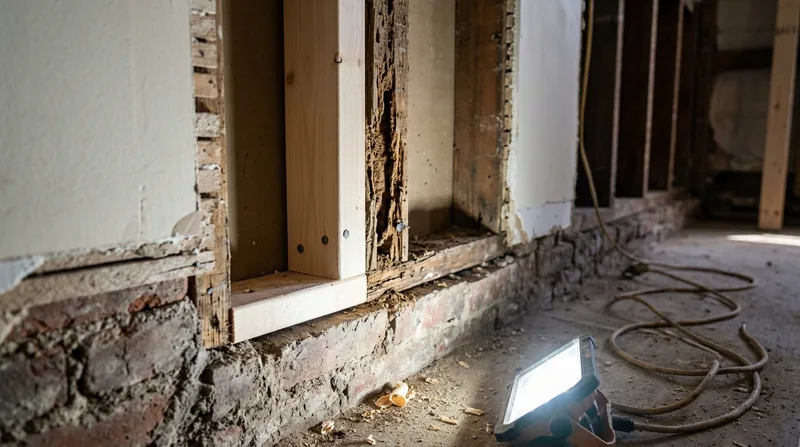




Termite Damage Repair in New York means replacing the wood that eastern subterranean termites and carpenter ants have hollowed out in the frame houses of Queens, Brooklyn, and Staten Island. Once your pest control company has treated the infestation, the damaged studs, sills, floor joists, and trim remain, and they need to be restored or replaced to bring structural integrity back. We work from your pest inspection report, remove the compromised wood, and install new framing or sill plate material, sistering in new joists where subfloor damage has weakened the floor. The damp cellars and rubble-stone foundations that sit under many of these older homes create the perfect breeding ground for moisture-loving insects, and the freeze-thaw cycles of New York winters push water into sill pockets and window frames. Termite damage is not an emergency like active infestation, but it does need to be addressed before rot accelerates or structural deflection becomes visible. We can help document the damage for an insurance claim and walk you through the repair scope and cost.
Why Termite Damage Repair Matters in New York Frame Houses
Eastern subterranean termites are active in the wood-frame neighborhoods of Queens, Brooklyn, and Staten Island, particularly in two-family homes, detached bungalows, and older frame cottages. Carpenter ants follow moisture into soft sills and window frames across the same areas. Once the pest control company eliminates the colony, the damage is done: galleries and tunnels run through the wood, reducing its load-bearing capacity and inviting secondary wood rot. Leaving damaged framing in place means the floor will deflect more over time, windows will settle, and drywall cracks will multiply. The repair must happen before those secondary problems compound the cost.
- We identify all insect-damaged wood using your pest inspection report and a hands-on walkthrough of the affected zones.
- We remove compromised studs, sill plates, rim joists, and floor joist sections that cannot be restored to full strength.
- We install new pressure-treated or solid-wood framing, sistering new joists alongside existing ones where subfloor damage is partial.
- We restore trim, casing, and exterior wood that termites have eaten, matching the original profile and finish where the home is a historic or protected structure.
- We document all work with photos and a detailed report for your insurance claim or future sale disclosure.
Addressing termite damage promptly keeps structural deflection from spreading and prevents the secondary damage that turns a manageable repair into a major replacement job.
Key info: A typical termite damage repair in Brooklyn or Queens involves replacing 2 to 6 linear feet of sill plate, 3 to 8 floor joists, and trim sections. Most jobs run 3 to 5 days and are completed before the next heating season. See our wood rot and dry rot repair page for related moisture damage.
For guidance on your local permit requirements, contact your city or county building department. New York City Department of Buildings and Westchester County Department of Planning can advise on thresholds for structural repair notification.
How We Repair Termite Damage: The Process in New York
Termite damage repair starts with your pest inspection report and a site visit where we probe the wood, measure the damage, and plan the replacement strategy. We work room by room, opening walls or flooring only where necessary, and we coordinate with your pest control contractor to ensure the treatment is complete before we start framing. In older brownstones and brick rowhouses, we often work in tight cellars and crawl spaces; in frame houses across Staten Island and Queens, we may access damage from below or from inside the wall cavity. We always shore up the floor or framing above before removing damaged wood, and we match the new material to the existing species and dimension whenever possible.
- We obtain your pest inspection report and schedule a walkthrough to confirm all damage zones and access points.
- We set up temporary support (adjustable posts, beam shores) to carry the load above while we remove compromised framing.
- We cut out and remove all termite-damaged wood, taking samples if needed for your insurance adjuster.
- We install new pressure-treated lumber for sill plates and floor joists, or solid hardwood for trim and casing in visible areas.
- We seal the new wood with primer and finish paint or stain to match the original, and we caulk all gaps and joints.
- We remove temporary support, inspect the floor and walls for level and plumb, and photograph the finished work for your records.
The entire process is designed to restore full structural integrity while keeping disruption to your home minimal. Most repairs are completed in 3 to 5 business days, depending on the extent of damage and wall or floor access.
Local example: A basement sill plate in a Park Slope brownstone showing termite galleries under the front parlor floor required removal of 8 linear feet of sill, installation of new pressure-treated 2x10, sistering of 4 joists, and replacement of 12 linear feet of trim. The job took 4 days and cost $4,800. See our floor joist and subfloor repair service for similar structural work.
Repair Methods for Termite Damage in New York
Repair strategy depends on how much wood is damaged, where it sits in the structure, and whether the damage is load-bearing or non-structural. A sill plate under a brick wall carrying 30 feet of masonry needs full replacement; a damaged stud in a non-load-bearing wall may be left in place if the damage is surface-only. We assess each piece and propose repair or replacement based on what the wood can still do, not on a blanket rule.
| Repair Method | Description | Best For |
|---|---|---|
| Sill Plate Replacement | Remove entire sill, install new pressure-treated 2x6, 2x8, or 2x10 bolted to the foundation, and reinstall rim joist and floor joists. | Load-bearing sills under brick walls or masonry; galleries running the full depth of the sill. |
| Floor Joist Sistering | Install a new pressure-treated joist alongside the damaged one, bolted or lag-screwed at 16 inches on center, carrying half the load. | Partial joist damage where the wood is still sound in the outer fibers and can be left in place. |
| Stud or Rim Joist Replacement | Cut out the compromised stud or rim joist, install new solid or pressure-treated wood, nail or bolt to the top and sole plates, and restore trim and casing. | Non-load-bearing studs in exterior or interior walls; rim joists with galleries but no deflection. |
| Trim and Casing Replacement | Remove damaged window casing, door jamb trim, or baseboard, install new wood matching the original profile and species, sand, and finish. | Surface damage to trim and finish carpentry; interior casing around windows or doors in brownstones and older homes. |
| Subfloor Section Replacement | Cut out damaged subfloor sheathing, install new 3/4-inch CDX plywood or T&G boards, and restore the finish floor or underlay. | Termite galleries in subfloor under kitchens, bathrooms, or bedrooms where moisture has accumulated. |
Each method preserves the home's integrity while addressing the specific damage pattern. We choose based on the inspection report, the load path, and your long-term plans for the space.
Termite Damage Repair Cost in New York: What to Expect
Termite damage repair in New York typically starts at $1,200 for minor trim or casing replacement and can reach $8,000 to $15,000 for a full sill plate replacement under a load-bearing wall or extensive subfloor repair. The main cost drivers are the linear footage of sill or joist to replace, whether the work is load-bearing or non-structural, and how much of the floor or wall must be opened to access the damage. A single damaged stud in a non-load-bearing wall costs far less than replacing 10 feet of sill plate under a brick facade. Access also matters: work in a finished basement or behind plaster costs more than work in an open crawl space. Travel to Staten Island, Freeport, or the outer boroughs is included in our estimate; there is no separate mileage fee.
We recommend getting 2 to 3 estimates from local carpenters so you can compare scope, material choices, and timeline. Ask each contractor to walk the damage with you, explain why they are proposing repair or replacement, and provide a detailed line-item estimate. Insurance may cover part or all of the cost if the damage resulted from an insurable event like a storm-driven water intrusion; we can help document the work for your adjuster's review. Visit our pricing page for a full breakdown of typical jobs and what moves the cost up or down.
Most homeowners in New York can expect to spend between $2,500 and $6,000 for a typical termite damage repair involving a partial sill, 4 to 6 joists, and finish trim. Larger jobs or those requiring structural engineering and permits will be estimated on-site. Call us at (929) 493-3098 for a free, no-obligation estimate within 24 hours.
Termite Damage Repair Near Me: What New York Homeowners Should Know When Hiring a Contractor
Hiring the right carpenter for termite damage repair means finding someone who can read the damage pattern, explain what needs to be fixed and why, and work without unnecessary demo or upselling. Look for a contractor who has worked in older homes in your neighborhood and understands the specific challenges of your building type, whether it is a brownstone, a wood-frame Victorian, or a brick two-family house. Ask to see references from similar jobs and request that the contractor walk you through the repair plan before work begins. Fully insured status is essential; ask to see the certificate of insurance and confirm that general liability and workers' compensation are current. If your home is in a historic district or has landmark status, check with your local landmarks preservation commission before hiring, as some repairs may require approval or specific material choices.
- Verify that the contractor is fully insured and can provide a current certificate of general liability and workers' compensation.
- Ask for at least three references from termite damage or structural carpentry jobs completed in the last two years in New York.
- Request a detailed written estimate that lists the wood to be removed, the replacement material and dimensions, and the labor timeline.
- Confirm whether your city or county requires a permit for the repair work and ask the contractor to help you file if needed.
- Check if your HOA or co-op board has approval requirements for structural work or exterior repairs before you commit.
- Discuss your pest control company's warranty and timeline to ensure the treatment is complete before framing work begins.
A good contractor will take time to explain the damage, answer your questions, and respect your home's character and history. If you are ready to move forward, contact us for a free estimate and we will respond within 24 hours.
Termite Damage Repair in New York: Pricing Guide
| Service | Price | Details |
|---|---|---|
| Minor trim or casing replacement | Starting at $1,200 | Damaged window casing, door jamb, or baseboard; typically 4-8 linear feet of finish carpentry replacement |
| Single stud or rim joist replacement | Starting at $2,000 | One non-load-bearing stud or rim joist removal and installation with new pressure-treated or solid wood and finish trim |
| Partial sill plate and floor joist repair | Starting at $4,500 | 4-8 linear feet of sill replacement, sistering of 3-6 joists, and restoration of trim; most common job scope in Queens and Brooklyn |
| Full sill plate replacement or extensive subfloor repair | On estimate | Load-bearing sill under masonry, replacement of 10+ linear feet, or subfloor damage across multiple rooms; requires site visit and structural assessment |
| Travel and site visit | Included | No separate mileage or travel fee in New York and surrounding service areas; estimate response within 24 hours |
| Free estimate | Free | Detailed written estimate with scope, materials, timeline, and cost; no obligation to book; call (929) 493-3098 |
Indicative pricing, the exact cost depends on square footage, finish, and site access. Free personalized estimate within 24h at (929) 493-3098.


