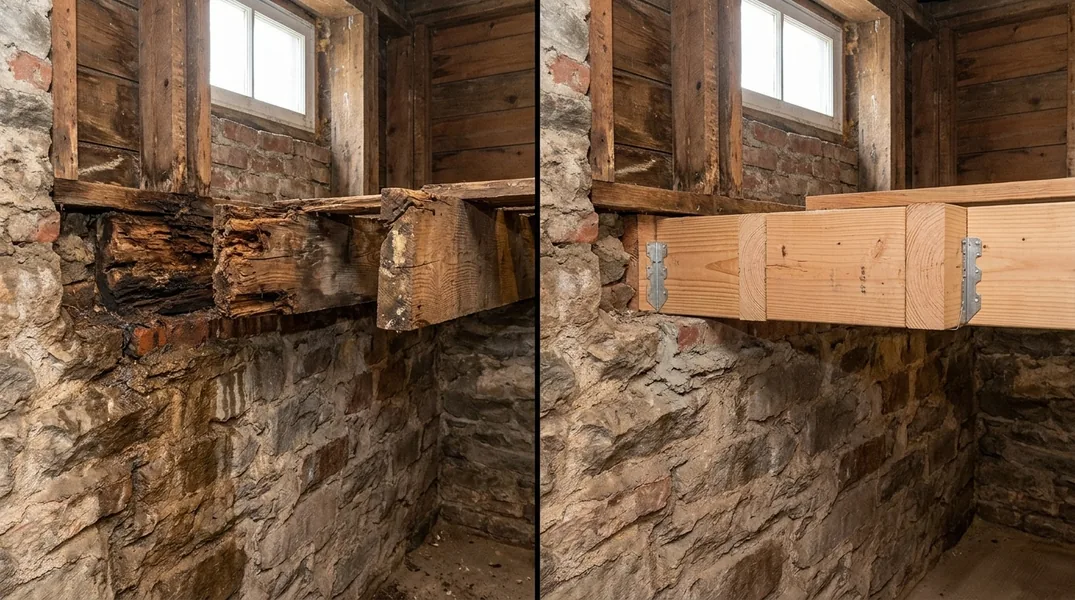
Understanding Dry Rot vs Termite Damage
If you own a home in New York, the sight of soft, crumbling wood is cause for alarm. But before you panic, it's important to understand what you're dealing with. Dry rot and termite damage are two of the most common wood-destroying problems homeowners face, yet they require completely different treatment approaches. Confusing one for the other could lead to wasted money, ongoing structural damage, or worse.
The good news is that with a little knowledge, you can learn to spot the differences yourself. Understanding whether you're dealing with Wood Rot & Dry Rot Repair needs or Termite Damage Repair is the first critical step toward protecting your investment. This article will walk you through the telltale signs of each problem, so you know exactly what you're looking at and when to call in a professional.
What Does Wood Rot Look Like? Visual Signs to Spot
Dry rot, despite its name, occurs when wood is exposed to excessive moisture. The fungus that causes dry rot thrives in damp conditions, breaking down the wood's cellular structure from the inside out. When you're inspecting your home for Wood Rot & Dry Rot Repair needs, look for wood that appears soft, spongy, or crumbly to the touch. The affected wood often darkens significantly, taking on a deep brown or blackish hue. In advanced stages, the wood may crack in a distinctive cubical pattern, almost like it's been scored with a grid.
One of the most telling characteristics of dry rot is that it can spread through wood even in areas that aren't directly exposed to moisture. This makes it particularly dangerous because the damage may extend far beyond what's immediately visible on the surface. You might notice a musty, earthy odor emanating from affected areas, which is the smell of the fungal growth itself. Dry rot typically appears in basements, crawl spaces, around windows and doors, and in areas where water has pooled or leaked over time.
The wood affected by dry rot becomes increasingly brittle and loses its structural integrity. If you press a screwdriver or awl into the wood and it sinks in easily without resistance, that's a red flag. The wood should feel firm and solid. Pay special attention to wooden beams, joists, and support structures, as these are critical to your home's safety.
Signs of Termite Damage in Wood: What to Look For
Termite damage tells a very different story than dry rot. Termites are insects that actively consume wood as a food source, and they leave behind distinct evidence of their presence. Unlike the soft, crumbly appearance of dry rot, termite damage typically creates hollow galleries or tunnels inside the wood. The wood may appear structurally intact on the outside while being completely hollowed out on the inside, which makes termite damage particularly insidious.
When inspecting for Termite Damage Repair, look for mud tubes or shelter tubes running along foundation walls, basement joists, or crawl spaces. These tubes, which can be as thin as a pencil or thicker than your thumb, are highways that termites use to travel from the soil to the wood in your home. They're made of soil, saliva, and fecal matter, and they protect termites from dry air and predators. Finding these tubes is a strong indicator of an active or recent termite infestation.
Another key difference is the presence of frass, or termite droppings. If you see tiny pellets that look like sawdust or sand near wood surfaces, especially around windowsills or door frames, these could be termite feces. Some termite species, called drywood termites, push their droppings out of small holes in the wood, creating a distinctive appearance. You might also notice discarded termite wings near entry points, or hear a faint clicking sound coming from inside the walls if the infestation is active.
Key Differences: Moisture vs Insects
The fundamental difference between dry rot and termite damage comes down to their causes. Dry rot is a fungal problem rooted in moisture management. Termites are living insects that actively feed on cellulose in wood. This distinction matters enormously when it comes to treatment. A moisture problem requires you to address the source of water intrusion and eliminate excess humidity. An insect problem requires pest control intervention followed by structural repair.
Dry rot spreads through spores that travel through the air and take hold in damp wood. Once moisture is controlled, the fungus stops spreading, though the damaged wood still needs to be replaced. Termites, on the other hand, continue to feed and multiply as long as they have access to wood and favorable conditions. An active termite colony can cause significant structural damage in just a few years, making early detection critical.
The appearance of the damage also differs. Dry rot creates a soft, punky texture with visible cracks and discoloration. Termite damage often looks deceptively minor from the outside, with the worst destruction hidden inside hollow galleries. A piece of wood damaged by termites might look nearly normal until you apply pressure and it crumbles. This is why professional inspection is so important. What looks like a minor issue could be major damage hiding just beneath the surface.
When to Call a Professional Carpenter Near Me in New York
If you've discovered wood damage in your home, don't wait to get professional help. Whether you're dealing with dry rot, termite damage, or you're simply unsure, a qualified carpenter can provide an accurate diagnosis and recommend the best course of action. In New York, where older homes are common and moisture is a persistent challenge, wood damage is a serious concern that affects both safety and property value.
New York City Carpentry specializes in identifying and repairing both dry rot and termite damage. Our team can assess the extent of the problem, determine whether structural elements like Floor Joist & Subfloor Repair or Beam Replacement & Load-Bearing Wall Removal are needed, and restore your home to safe, sound condition. We understand the unique challenges that New York homeowners face, from aging foundations to the region's humid summers and wet winters.
Don't let wood damage compromise your home's structural integrity or your peace of mind. Contact New York City Carpentry today at (929) 493-3098 or request a free estimate to learn exactly what you're dealing with and what repair options are available. Early detection and professional treatment can save you thousands of dollars in the long run and protect your family's safety.
Wood Rot & Dry Rot Repair Cost in New York: What to Budget
The cost of repairing wood damage in New York varies widely depending on the extent of the problem, the location of the damage, and what structural elements are affected. A small area of surface dry rot might cost just a few hundred dollars to repair, while extensive damage affecting floor joists, beams, or load-bearing walls could run into the thousands. Understanding what factors influence pricing can help you budget appropriately and avoid sticker shock.
Professional inspection and diagnosis are essential first steps. A carpenter will need to assess how deep the damage goes, whether it's affecting critical structural components, and what remediation work is needed. If dry rot is present, the source of moisture must be identified and corrected, or the problem will simply return. If termites are involved, pest control treatment must happen before structural repairs can begin. These preliminary steps add to the overall project cost but are absolutely necessary for a lasting solution.
The best way to get an accurate sense of what your specific situation will cost is to have a professional evaluate the damage. New York City Carpentry offers free estimates for wood damage assessment and repair. Our team will provide you with a clear breakdown of what needs to be done, why, and what it will cost. Whether your damage is minor or extensive, getting a professional opinion is far less expensive than guessing wrong and making the problem worse. Call (929) 493-3098 or visit our website to request your free estimate today.
Looking for a professional carpentry contractor in New York? New York City Carpentry responds fast for all your carpentry needs.
Get a Free QuoteOur services: Wood Rot & Dry Rot Repair · Termite Damage Repair · Floor Joist & Subfloor Repair