Why New York Weather Is a Wood Killer
Living in New York means your home faces a perfect storm of moisture, salt, and temperature swings that accelerate wood decay. Nor'easters dump heavy rain and snow, while coastal salt air corrodes wood fibers from the outside in. Storm surge during hurricane season pushes saltwater into basements, crawl spaces, and lower framing, leaving wood saturated for weeks or months. Even inland properties experience flooding that soaks subfloors and joists, creating ideal conditions for rot to take hold.
The problem is compounded by freeze-thaw cycles. Water enters wood, freezes, expands, and cracks the grain. When it thaws, more moisture seeps deeper. Repeat this cycle dozens of times each winter, and wood that looked sound in October may be crumbling by spring. Add the region's high humidity and acid rain, and you have a recipe for rapid deterioration that homeowners often don't notice until structural damage is already advanced.
Nor'easter Damage and Your Deck or Stoop
Decks and stoops are the first casualties of nor'easter damage repair situations. These outdoor structures sit exposed to wind-driven rain and salt spray, with nowhere for water to drain except into the wood itself. A typical nor'easter can dump several inches of rain in 24 to 48 hours, and if your deck boards or stoop stairs are already compromised by age or poor maintenance, that deluge will accelerate rot exponentially. Wood that was merely soft to the touch before the storm may be completely spongy and unsafe afterward.
The damage often starts invisibly. Water wicks into end grain, soaks into fastener holes, and pools under railings where debris collects. By the time you see visible rot or discoloration, the decay has usually penetrated one to two inches deep. Stoops are especially vulnerable because they're often built with concrete foundations that trap moisture against the wood framing underneath. After a major storm, the wood sits wet for extended periods, and without proper ventilation, fungal spores colonize the soggy fibers. If you notice soft spots, dark staining, or a spongy feel on deck boards or stoop treads after a nor'easter, contact New York City Carpentry for a free estimate. Early intervention can save thousands in structural repairs.
Salt Air Deck Rot: A Slow Burn in Coastal Areas
Homeowners in coastal New York neighborhoods face a relentless enemy: salt air. Salt spray from the ocean deposits microscopic sodium chloride crystals on every exposed surface, including wood decking, railings, and trim. Unlike freshwater, salt doesn't simply evaporate. It absorbs moisture from the air, keeping wood damp even on dry days. This constant dampness accelerates fungal growth and wood-eating organisms that thrive in salty, moist environments.
Salt air deck rot typically appears as a grayish or blackish discoloration that spreads outward from the deck's perimeter. The wood becomes soft and spongy, often crumbling when you press it with a screwdriver. The rot advances faster in shaded areas where salt-laden moisture lingers longest. Many homeowners treat this as cosmetic and delay repairs, but salt air rot is structural rot. It weakens the integrity of joists, beams, and ledger boards that support the entire deck. A deck that seemed sturdy in summer may develop dangerous sag or movement by winter. If you live within a few miles of the coast and notice salt air deck rot, professional Wood Rot & Dry Rot Repair is essential to prevent catastrophic failure.
Storm Surge Wood Damage: When Floodwaters Attack Your Foundation
Storm surge during hurricanes and tropical storms can push saltwater several feet above normal tide levels, inundating basements, crawl spaces, and lower wall framing with contaminated water. Unlike rain, which is relatively neutral, saltwater accelerates decay and can damage wood in ways that freshwater cannot. The salt deposits into the wood grain, drawing moisture continuously even after the floodwaters recede. Wood that was submerged for just a few hours can remain damaged for months or years if not properly dried and treated.
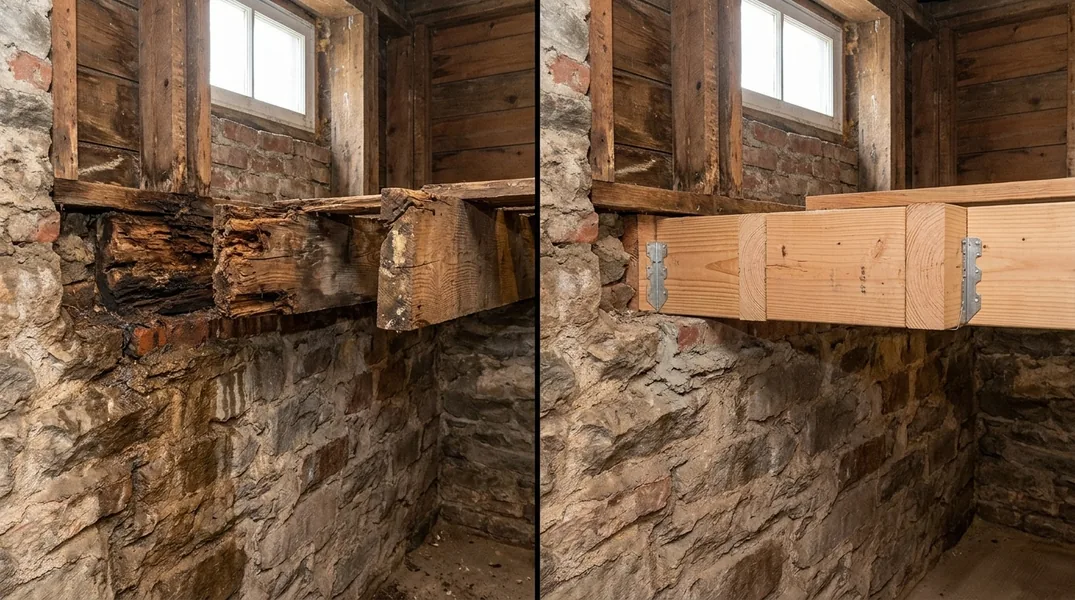
Storm surge wood damage often goes unnoticed because the worst destruction happens below grade or inside wall cavities. Floor Joist & Subfloor Repair becomes critical when saltwater has soaked into rim joists, sill plates, and the subfloor. These structural elements are the bones of your home. If they rot, the entire house can settle unevenly, causing doors and windows to jam, cracks to appear in walls, and eventually, catastrophic structural failure. After any flooding event, it's crucial to have a professional inspection to assess hidden moisture damage. New York City Carpentry can identify compromised framing and recommend whether repair or replacement is necessary. Call (929) 493-3098 to schedule an inspection after a storm.
Identifying Flood Damaged Framing Before It's Too Late
Homeowners often assume their framing is fine if the floodwaters receded and there's no visible mold. This is dangerous thinking. Flood damaged framing repair requires identifying wood that's been compromised even if it looks normal on the surface. Early signs include a musty smell in the basement or crawl space, soft spots in rim joists or sill plates when probed with a screwdriver, and any visible darkening or discoloration of wood that was submerged. You may also notice that wood feels cooler or damper than surrounding areas, indicating trapped moisture.
The challenge is that wood can remain structurally weakened long after it appears dry. Saltwater penetration causes internal decay that progresses invisibly for weeks or months. By the time visible rot appears, significant structural damage may have already occurred. This is why professional assessment is so important. A trained carpenter can use moisture meters, probe techniques, and visual inspection to determine the true extent of damage. If framing is compromised beyond repair, Beam Replacement & Load-Bearing Wall Removal may be necessary to restore structural integrity. Don't gamble with your home's safety. If your property experienced flooding, have it inspected by New York City Carpentry.
Wood Rot & Dry Rot Repair Cost in New York: What to Budget
The cost of repairing weather-related wood damage varies dramatically depending on the extent of decay, the location of the damage, and whether structural elements need replacement. A small area of surface rot on a deck board might cost a few hundred dollars to repair, while extensive subfloor or joist replacement can run into thousands. In New York, where labor costs are higher than the national average, homeowners should budget accordingly. Delaying repairs is almost always more expensive. Wood rot spreads exponentially, and what costs $1,000 to fix today may cost $5,000 or more if left untreated for a year.
Many homeowners are surprised to learn that flood damage repair is often not covered by standard homeowners insurance unless they carry a separate flood insurance policy. This means the cost comes directly out of your pocket. Understanding the pricing structure upfront helps you budget and make informed decisions. New York City Carpentry provides transparent estimates that break down labor, materials, and any structural upgrades needed. We recommend getting a professional assessment as soon as possible after storm damage, because the sooner you understand the scope of repairs, the sooner you can plan your budget and prevent further deterioration.
Looking for a professional carpentry contractor in New York? New York City Carpentry responds fast for all your carpentry needs.
Get a Free QuoteOur services: Wood Rot & Dry Rot Repair · Termite Damage Repair · Floor Joist & Subfloor Repair