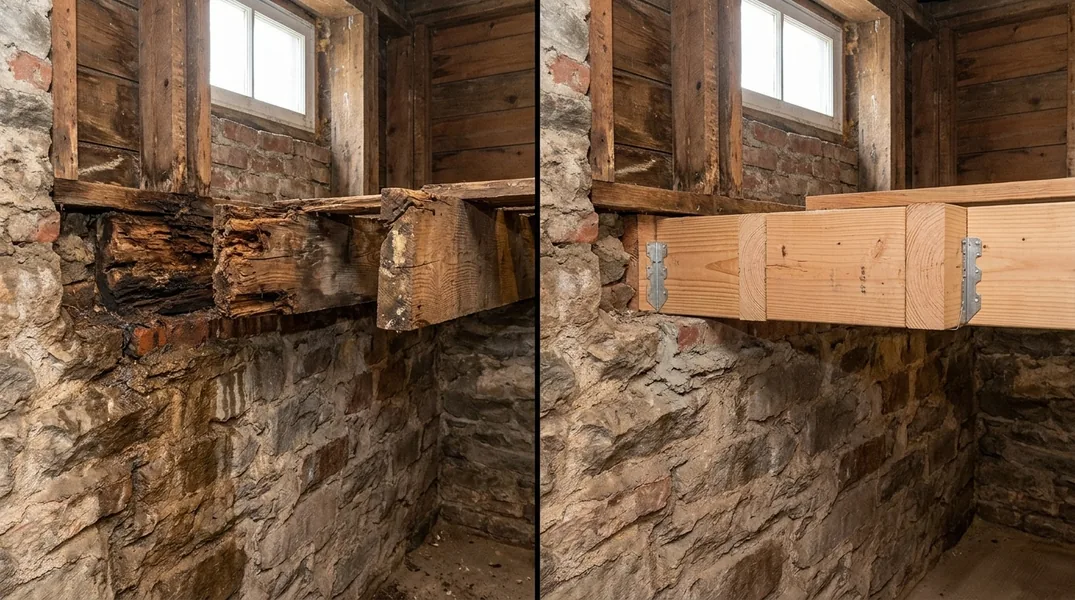
Why Brooklyn Brownstones and Queens Frame Houses Are Prone to Wood Damage
If you own a classic Brooklyn brownstone or a charming Queens frame house, you're living in a piece of New York history. These homes, many built between 1880 and 1920, have character and architectural details you simply cannot replicate in modern construction. But that same age comes with a serious responsibility: wood maintenance.
The wood framing in older homes was often harvested from old-growth forests, which means the wood itself is denser and more resistant to decay than modern lumber. However, over 100 years of exposure to moisture, temperature fluctuations, settling, and deferred maintenance has taken its toll. Brooklyn brownstones, with their often-neglected rear yards and basement areas, are particularly vulnerable to water intrusion. Queens frame houses, which typically have more extensive wood siding and exterior trim, face constant weathering that can lead to Wood Rot & Dry Rot Repair needs if not properly maintained.
The challenge is that wood damage doesn't announce itself loudly until it's advanced. By the time you notice soft spots, discoloration, or a musty smell, the problem has often been developing for months or even years. Understanding what causes wood deterioration in historic homes is the first step toward protecting your investment.
Identifying Wood Rot vs. Dry Rot in Your Historic Home
Not all wood damage is created equal, and the distinction between wood rot and dry rot matters when it comes to treatment. Wet rot, the more common form in New York homes, occurs when wood moisture content exceeds 20 percent. This typically happens in basements, around windows and doors, under damaged roof areas, or anywhere water is regularly present. You'll recognize wet rot by its soft, spongy texture and often a strong musty odor. The wood may appear darkened and can sometimes feel almost soggy when you press on it.
Dry rot is actually more serious, despite its name. It occurs in wood with lower moisture content, typically between 8 and 12 percent, and spreads much more aggressively through a structure. Dry rot can travel through masonry and brick, which makes it particularly dangerous in brownstones where wood beams are embedded in masonry walls. You might notice dry rot by its distinctive cracked, cubed appearance, or by the fine dust it produces. The problem with dry rot is that it can exist deep within structural members for years before becoming visible on the surface.
Both types require professional assessment and treatment. The difference in how they spread and how they need to be addressed means that a trained eye is essential. Many homeowners mistake the extent of damage because they're only looking at what's visible on the surface.
Common Problem Areas in Brooklyn Brownstones and Queens Frame Houses
In Brooklyn brownstones, the most vulnerable areas are typically the basement and sub-basement levels. These spaces often have foundation walls that have absorbed moisture for decades, and wooden sill plates (the bottom horizontal member of the frame) are frequently compromised. The rear extension areas, which were often added later and sometimes with less attention to waterproofing, are also high-risk zones. Additionally, the ornate wooden stoops and entrance areas that give brownstones their charm are constantly exposed to rain, salt from winter roads, and foot traffic that can push water into the structure.
Queens frame houses present a different challenge. Because they rely almost entirely on wood framing rather than masonry, the entire exterior envelope is critical. Wooden siding, trim, window frames, and roof overhangs all need to be in good condition to keep water out. A single failed caulk joint or a small roof leak can eventually compromise structural members like floor joists and rim joists. The Floor Joist & Subfloor Repair work we frequently encounter in Queens homes often traces back to roof or gutter failures that went unaddressed for too long.
Corner boards, fascia boards, and areas where different materials meet (such as where wood meets masonry or metal) are universal problem areas in both building types. These transition zones trap moisture and are often the first places where rot begins. Regular inspection of these areas, especially after heavy rain or during seasonal changes, can catch problems early.
Prevention Strategies Every Historic Homeowner Should Know
The most cost-effective approach to wood maintenance in an older home is prevention. This starts with keeping water out of the structure. Make sure your gutters and downspouts are clean and functioning properly. Downspouts should direct water at least four to six feet away from your foundation. In brownstones, this sometimes means being creative with corner lots or narrow side yards, but it's worth the effort. Check your roof annually for missing or damaged shingles, and don't ignore small leaks, thinking they'll resolve themselves. They won't.
Maintain proper grading around your home so that water slopes away from the foundation rather than toward it. In older neighborhoods where homes have settled unevenly over a century, this sometimes requires adding soil or even installing French drains. Seal cracks in foundation walls and around basement windows. Ensure that your basement or crawlspace has adequate ventilation and consider installing a dehumidifier if moisture is consistently high. For exterior wood surfaces, maintain paint and caulking in good condition. This protective barrier is your first line of defense against moisture penetration.
Inside your home, be mindful of moisture sources. Bathrooms and kitchens should have functional exhaust fans that vent to the exterior. Avoid storing items directly against exterior walls in basements, as this can trap moisture and prevent air circulation. If you notice condensation on windows or walls during winter, that's a sign that humidity levels are too high. These preventive measures might seem like small investments of time and money, but they can add years to the life of your home's wooden structural members.
When to Call a Professional for Wood Rot & Dry Rot Repair Near Me
Some wood maintenance tasks are suitable for a dedicated homeowner, but structural wood damage should always be evaluated by a professional. If you've noticed soft spots when you press on wood framing, if there's visible cracking or cubing, if you smell persistent musty odors, or if you see evidence of active water intrusion, it's time to call in an expert. Wood Rot & Dry Rot Repair requires proper diagnosis because the treatment approach depends on the type of damage, how far it has spread, and what structural systems are affected.
A professional inspection will typically involve probing suspect areas with specialized tools, checking moisture levels, and sometimes using thermal imaging to detect moisture hidden behind walls or ceilings. In some cases, a small section may need to be opened up to fully understand the extent of damage. This is not an area where guessing is acceptable. Underestimating the problem can lead to continued deterioration and eventually to structural failure. Overestimating might lead to unnecessary work, but it's always better to be thorough with structural issues.
New York City Carpentry serves homeowners throughout the region with honest assessments and reliable repairs. If you're concerned about wood damage in your brownstone or frame house, we recommend getting a free estimate from a qualified professional. You can reach us at (929) 493-3098 to schedule an inspection. The cost of a professional evaluation is minimal compared to the cost of structural failure or the health risks associated with mold and decay.
Wood Rot & Dry Rot Repair Cost in New York: What to Budget
The pricing for wood rot repair varies significantly depending on the extent of damage, the location of the affected wood, and the complexity of the repair. A small localized rot spot on exterior trim might cost $500 to $1,500 to repair, while structural damage affecting floor joists or load-bearing beams can run into the thousands. In Brooklyn brownstones, repairs are often more complex because of the masonry integration and the need to work within historic preservation guidelines if your home is designated.
The most expensive repairs typically involve structural members. If Floor Joist & Subfloor Repair is needed, or if Beam Replacement & Load-Bearing Wall Removal becomes necessary, you should budget $3,000 to $10,000 or more, depending on the scope. However, these costs should be viewed as an investment in preventing catastrophic structural failure, which would be far more expensive and potentially dangerous.
The best way to manage costs is through early detection and prevention. A $200 repair to exterior caulking and paint today prevents a $5,000 structural repair five years from now. When you're ready to understand the specific costs for your situation, contact New York City Carpentry for a detailed free estimate. We'll assess your specific situation and provide transparent pricing so there are no surprises.
Looking for a professional carpentry contractor in New York? New York City Carpentry responds fast for all your carpentry needs.
Get a Free QuoteOur services: Wood Rot & Dry Rot Repair · Termite Damage Repair · Floor Joist & Subfloor Repair