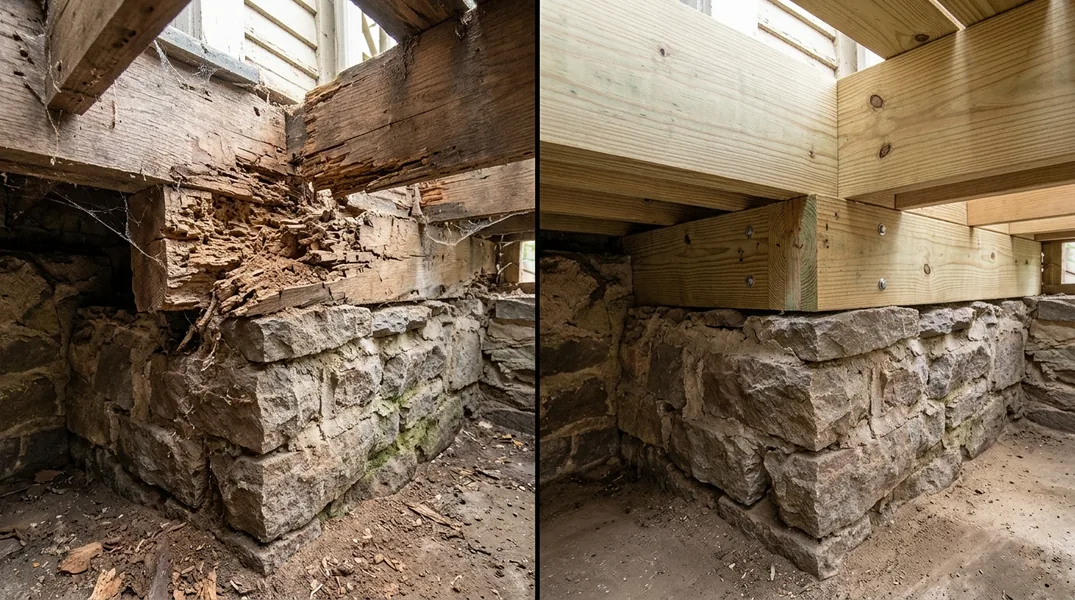
Understanding Wood Rot vs. Termite Damage
When you spot soft, discolored wood on your New York home, the first question is always: what caused this damage? Wood rot and termite damage look similar at first glance, but they require very different repair approaches. Understanding the difference can save you thousands of dollars and help you make the right decision about whether repair or replacement is your best option.
Wood rot occurs when moisture penetrates wood fibers and fungi begin to break down the cellulose. This process happens gradually over months or years, typically in areas with poor drainage, roof leaks, or chronic dampness. Termite damage, on the other hand, happens when colonies of wood-eating insects tunnel through structural wood, leaving hollow galleries behind. Both create weakened wood that poses safety risks, but the treatment paths diverge significantly. If you suspect either problem in your home, contact New York City Carpentry for a free estimate to determine exactly what you're dealing with.
When Repair Makes Sense: The Case for Fixing Rotted Wood
Many homeowners assume that any rotted wood means full replacement, but that's not always true. Wood Rot & Dry Rot Repair is often possible when the damage is caught early and remains surface-level or affects less than 30 percent of the structural member. If your siding shows rot in just one section, or a window frame has softness around the edges, repair without replacing can be both practical and cost-effective.
The repair process typically involves removing the damaged wood, treating the area with fungicide to prevent recurrence, and filling the void with epoxy wood filler or new wood patches. This approach works especially well for decorative elements, trim, and non-load-bearing components. However, the success of a repair depends entirely on eliminating the moisture source that caused the rot in the first place. If water continues to seep into the area, the rot will return, and you'll have wasted money and time on a temporary fix.
When Replacement Is Necessary: Structural and Safety Concerns
Full replacement becomes essential when wood rot or Termite Damage Repair affects load-bearing members like floor joists, beams, or wall studs. Structural wood that's compromised can no longer support the weight of your home, creating a serious safety hazard. If you notice sagging floors, doors that won't close properly, or visible rot in your basement beams, replacement is not optional. Attempting to repair severely rotted structural wood is like putting a band-aid on a broken bone, it looks fine on the surface but fails under pressure.
For exterior elements like siding, the decision between repair and replacement depends on the extent of damage and the overall condition of the material. If you have New York colonial or older home with wood siding, isolated rot in one or two boards might justify repair. But if rot is widespread across multiple sections or if your siding is already aging, full replacement of affected sections provides better long-term protection and curb appeal. Floor Joist & Subfloor Repair almost always requires replacement rather than patching, since these components bear constant stress and must be completely sound.
Termite Damage: Why Repair Options Are Limited
Termite damage presents a unique challenge because it's often more extensive than it appears on the surface. Termites work from the inside out, leaving a thin shell of wood that looks intact while the interior is hollowed out. This hidden damage means that what looks like a small repair job can suddenly become a major structural issue once you open up the wood. Unlike rot, which you can sometimes arrest with fungicide and moisture control, termite damage requires the infested wood to be removed and replaced, plus professional pest treatment to eliminate the colony.
If you discover termite damage in your home, don't attempt a DIY repair. The structural integrity of your home depends on getting this right, and an experienced carpenter working with a pest control specialist is your best path forward. The good news is that modern termite treatments are highly effective, and once the colony is eliminated and damaged wood is replaced, the problem typically doesn't recur. The challenge is the upfront cost, which is why getting a professional assessment early matters so much.
Wood Rot & Dry Rot Repair Cost in New York: What to Budget
The pricing for wood damage repair varies dramatically based on the type of damage, the location, and whether structural members are involved. A simple siding repair might run $300 to $800, while Floor Joist & Subfloor Repair in a basement can easily exceed $2,000 to $5,000 depending on the extent of the problem. Beam Replacement & Load-Bearing Wall Removal projects in older New York homes can run $3,000 to $10,000 or more, especially if multiple beams are affected or if the home requires temporary support structures during work.
The key insight is that catching damage early almost always costs less than waiting. A small area of rot that costs $500 to repair today could become a $3,000 replacement job if left untreated for two years. Termite damage follows the same pattern, which is why annual inspections in older homes are a smart investment. To understand the specific costs for your situation, call New York City Carpentry at (929) 493-3098 or request a free estimate today. We'll assess the damage honestly and give you a clear picture of repair versus replacement options.
Making Your Decision: A Practical Framework
Here's a straightforward way to think about the repair or replace decision. First, have a professional inspection done to determine the type and extent of damage. Second, ask whether the damaged wood is structural or decorative. Third, consider the age of the material and whether other components nearby show signs of wear. Fourth, evaluate the moisture source and whether it can be permanently eliminated. If the damage is minor, non-structural, and the moisture problem is fixable, repair is usually the right choice. If the damage is extensive, structural, or if moisture issues persist despite your best efforts, replacement is the safer and often more economical long-term option.
Don't let uncertainty keep you from taking action. Wood damage gets worse over time, never better. Whether you're in New York, Yonkers, Mount Vernon, or anywhere in the region, the team at New York City Carpentry has the experience to guide you through this decision with honesty and expertise. We've repaired hundreds of homes, and we know when a repair will last and when replacement is truly necessary. Reach out today at (929) 493-3098 to schedule your inspection and get a clear path forward.
Looking for a professional carpentry contractor in New York? New York City Carpentry responds fast for all your carpentry needs.
Get a Free QuoteOur services: Wood Rot & Dry Rot Repair · Termite Damage Repair · Floor Joist & Subfloor Repair