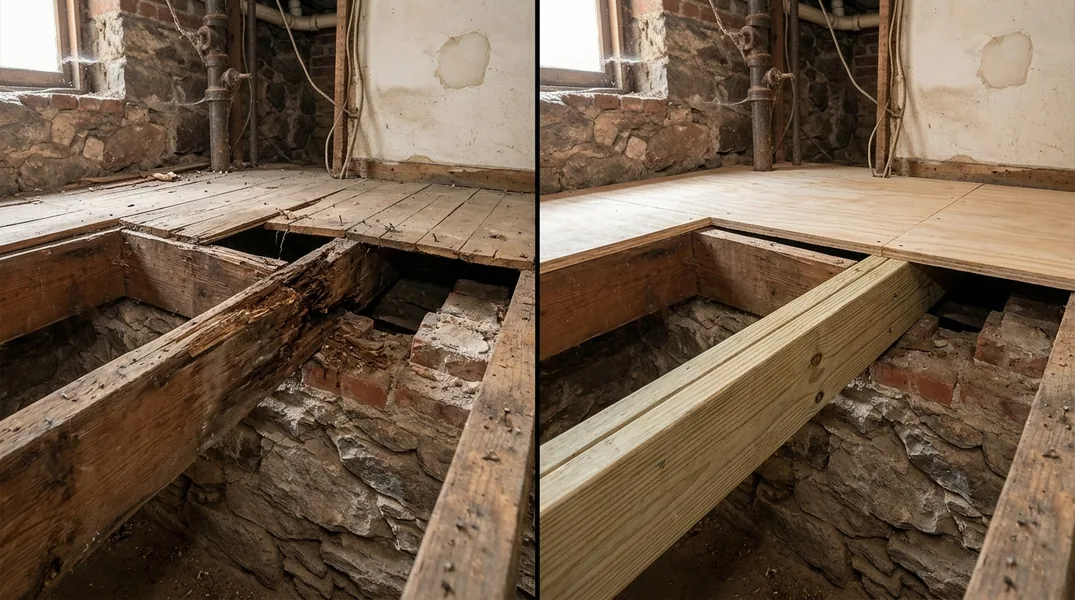
Why Is My Floor Sagging? The Hidden Culprit in Old Rowhouses
If you own a classic New York rowhouse built before 1950, you've probably noticed at least one room where the floorboards dip slightly underfoot or where doors no longer close properly. That spongy, uneven feeling isn't just cosmetic. It's a warning sign that something structural is failing beneath your feet, and in most cases, that something is your floor joists.
The primary cause of sagging floors in older New York homes is moisture damage to the wooden beams that support your floors. These floor joists, typically 2x8 or 2x10 pieces of wood, span from one wall to another and carry the weight of everything above them. When water infiltrates the basement or crawl space, it saturates these joists, leading to Wood Rot & Dry Rot Repair issues that compromise their structural integrity. Over time, the wood becomes soft and loses its load-bearing capacity, causing the floor to settle and sag.
The typical culprit is a damp cellar. Older rowhouses often have stone or brick foundations that weren't sealed properly, allowing groundwater to seep in during heavy rains or seasonal water table fluctuations. This chronic moisture creates the perfect environment for wood rot to develop, especially in joist pockets where the ends of floor joists sit directly against the foundation wall.
Understanding Joist Pockets and Rotted Beam Ends
One of the most common failure points in old rowhouses is the joist pocket. This is where the end of a floor joist is embedded into the foundation wall, typically recessed about 4 to 6 inches. While this construction method made sense a century ago, it created a moisture trap. The joist end, being the most porous part of the wood, absorbs water wicking up from the damp foundation. Because it's embedded in the wall, air circulation is restricted, and the wood never fully dries. This is the ideal scenario for wood rot to flourish.
When a joist pocket becomes waterlogged, the wood begins to soften and decay from the inside out. You might not see obvious signs of rot from above, but the structural damage is happening silently. The affected joist loses up to 50 percent or more of its original strength, which means it can no longer support its share of the floor load. That load shifts to neighboring joists, causing them to deflect slightly. Over months or years, this deflection becomes visible as a noticeable sag in the floor surface.
The problem compounds when multiple joists are affected. In many New York rowhouses, we find that four, five, or even more consecutive joists have rotted beam ends. This creates a long section of weakened floor structure, and the sag can be anywhere from half an inch to several inches depending on the severity and span of the joists.
Floor Joist Repair and Sistering Floor Joists: The Real Fix
Floor Joist & Subfloor Repair requires more than just cosmetic patching. The industry standard solution for rotted joists is a technique called sistering, which involves bolting or fastening a new, pressure-treated or solid wood beam alongside the existing damaged joist. This new sister joist shares the load with the compromised original joist, effectively restoring the floor's load-bearing capacity.
The sistering process begins with a thorough inspection and moisture assessment. A professional carpenter will remove flooring and subfloor to expose the damaged joists fully. Once exposed, the extent of the rot is documented, and the source of moisture is identified. If the joist pocket is waterlogged, the rotted end may need to be cut back, and the pocket itself may need to be sealed or relined with a moisture barrier. Only then can a sister joist be installed properly.
The sister beam is typically cut to match the length of the original joist and positioned tightly against it. It's secured using bolts, lag screws, or specialized joist hangers, spaced every 12 to 16 inches along the length. This creates a composite beam that is significantly stronger than the damaged original. The new joist also provides an opportunity to address any settling or deflection in the floor by using adjustable posts or shims to gradually raise the floor back to level.
In some cases where rot is extensive, the entire joist may need to be replaced rather than sistered. This is more invasive and costly, but it's sometimes the only safe option. The decision depends on how much of the joist is compromised and whether the structural integrity can be adequately restored through sistering alone.
Addressing the Root Cause: Moisture Control and Basement Waterproofing
Repairing sagging floors without addressing the moisture problem is like treating a symptom without curing the disease. Within a few years, a new sister joist can begin to rot if the basement remains damp. That's why professional Floor Joist & Subfloor Repair always includes a moisture management plan.
This might involve sealing cracks in the foundation, installing interior or exterior drainage systems, improving grading around the home's perimeter, or installing a sump pump. In some cases, joist pockets themselves are relined with a moisture-resistant material like rubber or plastic to break the capillary action that draws water into the wood. Dehumidifiers and improved basement ventilation also play a role in keeping the environment dry.
Without these moisture controls, the repair is incomplete. New York's humid climate and aging infrastructure mean that basement water intrusion is a chronic problem for many rowhouse owners. Addressing it comprehensively protects your investment in the new joists and prevents future damage.
Floor Joist Repair Cost in New York: What to Budget
The cost of repairing sagging floors depends on several factors, including the number of joists affected, the extent of the rot, the depth of the moisture problem, and accessibility. A single sistered joist in an easily accessible basement might cost between $1,500 and $3,000, while a comprehensive repair involving four or five joists plus moisture remediation could range from $8,000 to $15,000 or more. If structural beams or Beam Replacement & Load-Bearing Wall Removal is required, costs escalate further.
Many homeowners are surprised by these figures, but it's important to understand what's included. Professional floor joist repair involves structural engineering, temporary support systems to carry the floor load safely during work, proper removal and disposal of rotted wood, installation of new beams, moisture remediation, and restoration of flooring and subfloor. This is not a DIY job, and cutting corners can result in safety hazards and future structural failure.
The best way to understand your specific situation and pricing is to schedule a free estimate with a qualified carpenter. New York City Carpentry offers detailed inspections and transparent quotes so you know exactly what needs to be done and what it will cost. Call (929) 493-3098 to arrange an inspection of your sagging floors.
When to Call a Professional for Floor Joist Repair Near Me
If you notice a sagging floor, soft spots, or a musty smell in your basement, don't wait. These are signs that structural damage is progressing. The longer you delay, the more joists become compromised, and the more expensive the repair becomes. Additionally, a severely sagging floor can pose safety risks and may affect your home's resale value or insurance coverage.
A qualified structural carpenter can assess the situation, determine the cause, and recommend the appropriate repair strategy. They'll also coordinate with any necessary moisture specialists or contractors to ensure the entire problem is solved, not just patched over. If you're in New York and concerned about sagging floors in your rowhouse, reach out to New York City Carpentry for a professional evaluation. We have years of experience with the unique structural challenges of older homes and can provide solutions that last. Contact us at (929) 493-3098 or visit our website to request your free estimate today.
Looking for a professional carpentry contractor in New York? New York City Carpentry responds fast for all your carpentry needs.
Get a Free QuoteOur services: Wood Rot & Dry Rot Repair · Termite Damage Repair · Floor Joist & Subfloor Repair