The New York Home Problem: Why Doors Stick Year-Round
If you own a home or rowhouse in New York, you've probably experienced the frustration of a door that won't close properly. One season it slides smoothly; the next, you're shouldering it shut like you're breaking into your own house. This isn't just an annoyance, it's a sign that something structural is happening beneath the surface of your walls and door frames.
Sticking doors are one of the most common complaints we hear at New York City Carpentry, and for good reason. New York's climate, combined with the age and construction methods of most rowhouses and older homes in the city, creates a perfect storm for wood movement. Understanding the root cause of your sticking door isn't just about convenience, it's about protecting your home's structural integrity and catching potential damage before it becomes expensive.
Seasonal Swelling and Door Sticking in Winter
When people ask about sticking doors in winter, they're often surprised to learn that cold weather itself isn't the culprit. Instead, it's the dramatic humidity shifts that winter brings indoors. When you heat your home during the cold months, you're also drying out the air inside. Paradoxically, this can cause wood to expand and contract more than you'd expect. Wooden door frames, jambs, and doors themselves absorb and release moisture constantly, and this cycle is especially pronounced in older New York homes where weather sealing may be poor.
The phenomenon of door sticking humidity works both ways. In summer, when moisture levels rise, wood swells as it absorbs humidity from the air. In winter, artificial heating dries everything out, and wood shrinks. This constant expansion and contraction puts stress on the door frame and the door itself. If your door won't close properly in one season but works fine in another, humidity is almost certainly playing a role. The key is recognizing that this seasonal movement is normal to a degree, but excessive sticking can indicate that your door frame has shifted enough to need professional attention.
House Settling and Structural Movement in Older Rowhouses
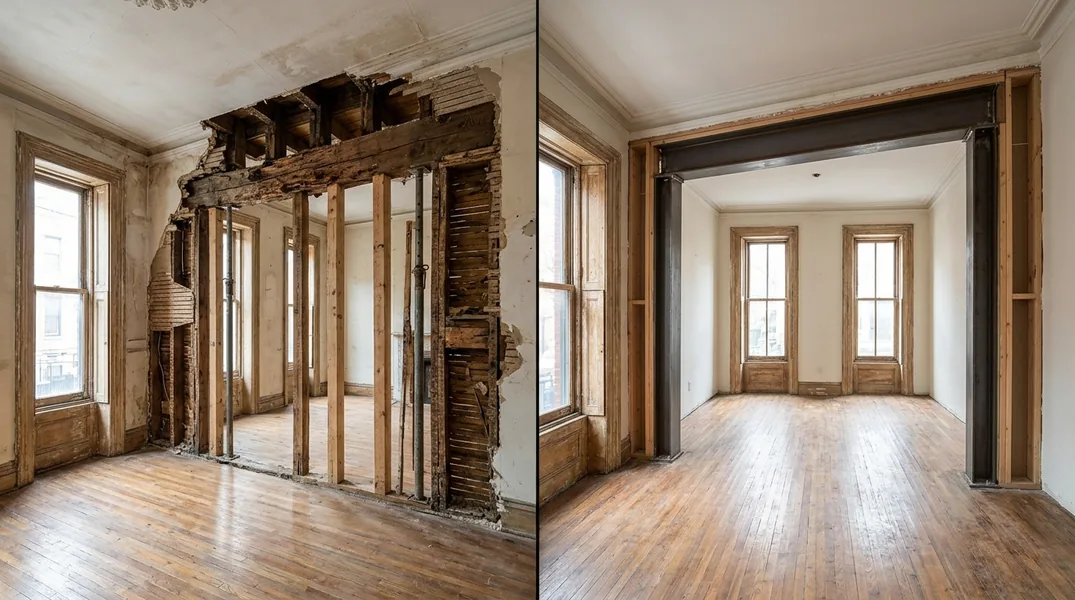
Many homeowners assume a sticking door is just a cosmetic issue, but in older rowhouses, it's often a red flag for something more serious: house settling. Rowhouses built in the 19th and early 20th centuries were constructed using wood framing methods that, while durable, are susceptible to gradual movement over time. Foundations settle unevenly, wooden support beams compress under decades of load, and the entire structure can shift by fractions of an inch in ways that seem invisible but have real consequences for doors, windows, and walls.
When a house settles, it doesn't settle evenly. One corner might drop slightly while another remains stable, or a load-bearing wall might compress more than the walls around it. This differential settling throws door frames out of square. A door frame that was perfectly plumb when installed 100 years ago may now be tilted just enough that the door binds against the frame. If you notice that your door sticks in a specific spot (usually at the top corner), or if the sticking has gotten progressively worse over months or years, structural settling is likely involved. This is especially common in New York rowhouses where foundation issues and wood deterioration can compound over time.
When Door Sticking Signals Wood Rot or Structural Damage
Here's where the problem becomes more than just inconvenient: a sticking door can be your early warning system for Wood Rot and Dry Rot Repair issues. When wood rot develops in a door frame, the wood loses density and structural integrity. The frame may warp, twist, or swell unevenly as the rot progresses. You might notice the door sticking worse after rain, or in areas where the frame feels soft or spongy to the touch. If the rot is advanced enough, the frame may have actually shifted out of square because portions of it have deteriorated.
Similarly, if your home has experienced water damage, termite damage, or issues with Floor Joist and Subfloor Repair, the structural settling that follows can cause doors throughout your home to stick simultaneously. This is a sign that the problem goes beyond the door itself and requires a professional structural assessment. The good news is that catching these issues early, when a door first starts sticking, gives you the best chance of addressing them before they compromise your home's safety or value.
Diagnosing Your Sticking Door: What to Look For
Before you assume you need major structural work, take time to diagnose what's actually happening with your door. Start by observing the pattern of sticking. Does it happen in a specific season? Does the door stick at the top, bottom, or along the entire edge? Is the sticking getting worse over time, or is it stable? Try opening and closing the door slowly and note exactly where it catches. If it catches at the top corner, you likely have a frame that's tilted. If it catches along the entire edge, swelling is probably the issue.
Next, inspect the door frame and door itself for visual signs of damage. Look for soft spots, discoloration, or areas where paint is peeling or bubbling. Run your hand along the frame to feel for warping or unevenness. If the door frame feels significantly warmer or cooler than surrounding walls, or if you notice any musty odors, moisture problems may be at play. You can also check whether the door frame is square by looking at the gaps between the door and frame on all four sides. Uneven gaps suggest the frame has shifted. If you're seeing multiple warning signs, or if the problem is getting worse, it's time to call in a professional. New York City Carpentry can assess your door and identify whether it's a simple adjustment, a humidity issue, or something more serious that needs immediate attention. Contact us at (929) 493-3098 for a free estimate.
Professional Solutions for Sticking Doors in New York Homes
Once you've identified the cause of your sticking door, the solution depends on the underlying problem. If it's purely a humidity and seasonal swelling issue, a simple solution like planing the door edge or adjusting the hinges may be all you need. If the door frame has shifted due to house settling, the frame may need to be carefully adjusted back to square, or in some cases, the frame itself may need to be replaced. If you're dealing with wood rot or structural damage, that's where professional expertise becomes essential.
At New York City Carpentry, we've repaired hundreds of sticking doors in rowhouses and older homes throughout New York. We start with a thorough inspection to determine whether your issue is cosmetic, moisture-related, or structural. If rot is involved, we handle the full Wood Rot and Dry Rot Repair process, which includes removing damaged wood, treating the area, and installing new framing as needed. For settling issues, we may recommend structural assessment and, if necessary, work with engineers to address the underlying problem. The pricing for door repair varies widely depending on what's causing the problem, so getting a professional evaluation is the best first step. Call us at (929) 493-3098 or reach out through our website to schedule your assessment today.
Looking for a professional carpentry contractor in New York? New York City Carpentry responds fast for all your carpentry needs.
Get a Free QuoteOur services: Wood Rot & Dry Rot Repair · Termite Damage Repair · Floor Joist & Subfloor Repair