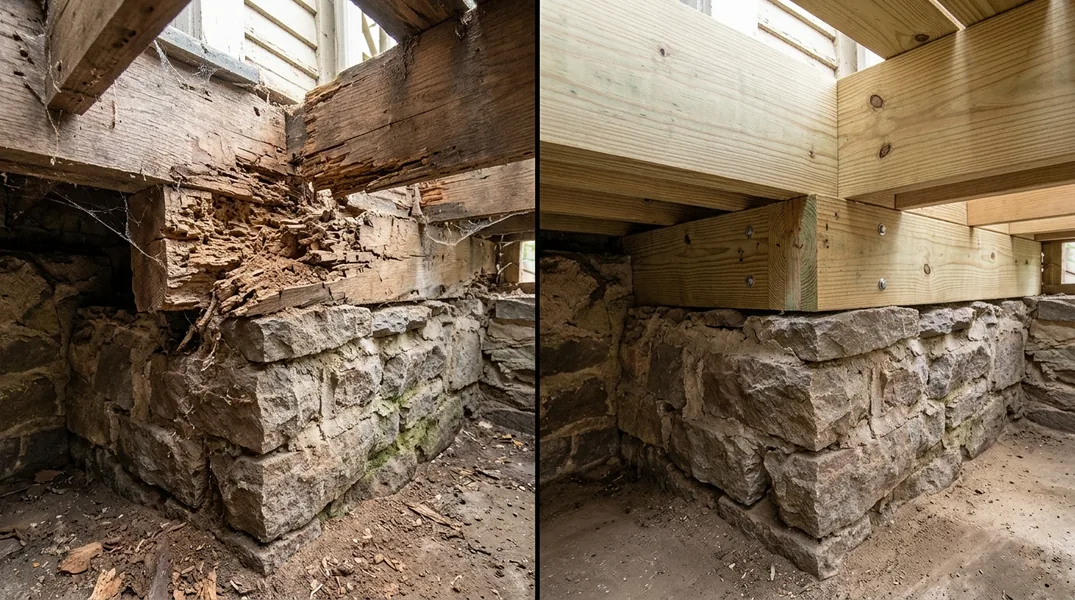
Why New York Homes Are Especially Vulnerable to Wood Damage
New York homeowners face a perfect storm of conditions that accelerate wood damage. The region's humid subtropical summers, freeze-thaw cycles in winter, and aging building stock create ideal environments for wood rot, termite infestations, and carpenter ant colonies. Unlike drier climates out west, the Northeast's moisture-rich air penetrates wood framing, foundation walls, and exterior trim, creating the dampness that fungi and insects need to thrive.
Many homes in New York were built 50 to 100+ years ago with construction methods that didn't prioritize moisture barriers or ventilation the way modern building codes do. Older foundations often lack proper waterproofing, basements flood seasonally, and roof leaks go undetected for months. Add in the city's aging water infrastructure, which sometimes causes water main breaks and basement seepage, and you have a recipe for structural wood damage that spreads silently behind walls and under floors.
Understanding Wood Rot: Causes and Early Warning Signs
Wood rot occurs when moisture allows fungal spores to colonize wood fibers, breaking down the cellulose that gives wood its strength. There are two main types: dry rot and wet rot. Wet rot is more common in New York and develops wherever wood stays damp for extended periods, such as around foundation cracks, under leaking gutters, or in poorly ventilated crawl spaces. Dry rot, despite its name, also requires moisture to start, but it spreads more aggressively and can travel through masonry to infect distant wood members.
Early Wood Rot & Dry Rot Repair is far less expensive than replacing entire structural beams or Floor Joist & Subfloor Repair later. Watch for soft, spongy wood that yields to a screwdriver, visible fungal growth (often brown, white, or orange), a musty odor in basements or crawl spaces, and paint that peels or bubbles on exterior wood. Interior walls or ceilings that feel damp or show discoloration are also red flags. If you catch rot in its early stages, a professional carpenter can often remove the affected wood, treat the area, and restore structural integrity without major reconstruction.
Termite Damage Repair in New York: A Growing Threat
Termites are less common in the far north, but they are absolutely present in New York and surrounding areas, particularly in older homes with wood-to-soil contact and high moisture. Eastern subterranean termites are the primary species, and they work silently, often undetected for years. A single colony can contain hundreds of thousands of workers, each consuming wood fiber day and night. By the time a homeowner notices Termite Damage Repair is needed, the structural damage can be severe.
The Termite Damage Repair process involves identifying the extent of infestation, treating the termite colony (usually through a pest control specialist), and then replacing or reinforcing damaged wood. Signs of termite activity include mud tubes along foundation walls, hollow-sounding wood, visible wings near windowsills in spring, and small holes in wood with a powder-like residue. Unlike carpenter ants, which leave visible sawdust, termites often leave little external evidence until damage is advanced. If you suspect termites, call a professional immediately. The longer an infestation persists, the more extensive and costly the repairs become.
Carpenter Ant Damage: Identification and Repair
Carpenter ants are large, dark ants that excavate galleries inside wood to create nesting chambers. Unlike termites, they do not eat wood; they simply hollow it out, which can weaken structural members just as severely. These ants are attracted to moisture and often nest in areas around leaks, damp insulation, and compromised wood. They are active year-round in heated buildings and particularly aggressive during spring and fall when they forage for food and water.
Carpenter ant damage repair starts with eliminating the moisture source and the ant colony itself, typically through pest control treatment. Once the infestation is controlled, a skilled carpenter assesses the extent of tunneling and decides whether wood can be reinforced or must be replaced. Small damage to non-structural trim may only require filling and sealing. However, galleries in floor joists, rim board, or load-bearing walls demand more comprehensive Floor Joist & Subfloor Repair or even Beam Replacement & Load-Bearing Wall Removal. The key is catching the problem early, which is why annual inspections of basements, crawl spaces, and attics are so important for homeowners in the region.
Prevention: How to Protect Your Home from Wood Rot, Termites, and Carpenter Ants
Prevention is always cheaper than repair. Start by controlling moisture, the root cause of most wood damage. Ensure gutters and downspouts channel water at least 4 to 6 feet away from your foundation. Seal cracks in foundation walls and around basement windows. Install or maintain proper grading so that soil slopes away from the house. In crawl spaces and attics, improve ventilation and consider installing a vapor barrier. Fix roof leaks promptly, and have a plumber address any water pipe leaks inside walls or under floors immediately.
Second, eliminate wood-to-soil contact wherever possible. Wooden deck posts, siding, and trim should be elevated or treated with a protective barrier. Have a pest control professional conduct an annual inspection, especially if you live in an older home or have had previous termite or ant activity. Consider a termite monitoring system if you are in a high-risk area. Finally, keep firewood, mulch, and leaf piles away from the foundation. These materials harbor termites and carpenter ants and can serve as a bridge to your home's structural wood.
When to Call a Professional: Getting a Free Estimate
If you notice any signs of termite damage, soft or discolored wood, mud tubes, or carpenter ant activity, do not delay. The longer you wait, the more extensive the damage becomes and the higher your repair costs. A professional inspection can determine whether the problem is surface-level or structural, and whether you need immediate repairs or can address it over time.
New York City Carpentry serves homeowners throughout New York with expert wood rot and pest damage assessment and repair. We provide a thorough inspection, detailed recommendations, and honest pricing so you know exactly what to expect. Call us at (929) 493-3098 or visit our website to request a free estimate today. The sooner you address wood damage, the sooner you protect your home's structural integrity and your family's safety.
Looking for a professional carpentry contractor in New York? New York City Carpentry responds fast for all your carpentry needs.
Get a Free QuoteOur services: Wood Rot & Dry Rot Repair · Termite Damage Repair · Floor Joist & Subfloor Repair